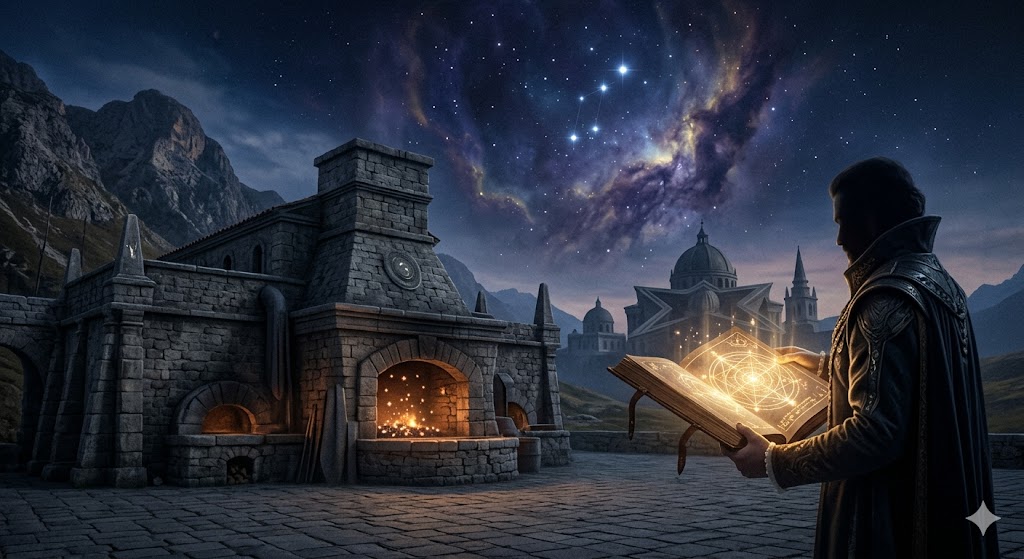
The Tartarian Legacy: From the Italian Forge to the Lyran Stars
The story of our world is often told in straight lines, but the truth is woven into a complex tapestry of hidden empires, forgotten technologies, and celestial origins. At the heart of this mystery lies Tartaria (or Great Tartary)—a name once found on every 17th and 18th-century map, now relegated to the "lost" chapters of history.
For those of us tracing lineages from the Italian Forge to the Lyran Stars, Tartaria isn't just a geographic region; it is the missing link in the Sovereign Blueprint.
1. What was Tartaria? The Evidence in the Archives
Until the late 19th century, encyclopedias and world maps (such as the 1637 Mercator Atlas) did not just list Russia or China; they showed a vast, sovereign territory known as Great Tartaria.
The Geography: It spanned from the Caspian Sea and the Ural Mountains to the Pacific Ocean, covering much of Siberia and Central Asia.
The Sovereignty: Historical archives, including the 1700 Map of Asia, divide the region into Muscovite, Chinese, and Independent Tartary, each with its own flags, distinct cultural identity, and governance.
The "Mud Flood" Theory: Proponents of the Tartarian Reset suggest a global cataclysm—a "Mud Flood"—occurred in the mid-1800s. This event supposedly buried the first floors of Tartarian structures (explaining the "half-windows" seen in older buildings in cities like Pittsburgh or New York) and allowed a new world order to claim the architecture as their own.
2. Surnames and the Lineage of the "Old World"
When we look at surnames like Vasselo, Amicone, Boring, and Hough, we are looking at more than just names; we are looking at markers of movement.
Many researchers believe that the Tartarian diaspora moved through the "Forges" of Europe—Italy, Germany, and Scotland—bringing with them advanced knowledge of masonry, metallurgy, and "free energy" harmonics.
The Italian Connection: The "Italian Forge" represents the preservation of this craftsmanship. Families like the Amicones and Vasselos carried the tactile mastery of the Old World into the industrial heartlands of Pennsylvania.
The Genealogic Reset: By changing the narrative of these families to "simple immigrants," the deeper connection to a high-civilization heritage was obscured. Tracing your lineage back to Italy is the first step in uncovering the Tartarian signature in your DNA.
3. The Lyran Connection: The Stars Above the Forge
The Sovereign Blueprint suggests that the Tartarian civilization wasn't just global—it was cosmic. In esoteric research, the Tartarians are often linked to the Lyran and Pleiadian lineages.
The Lyrans are frequently described as the "Architects of the Galaxy," known for their mastery of physical form and high-vibrational technology. The massive stone structures, star forts, and domes found across the world—from the cathedrals of Europe to the "Old World" buildings of the United States—are seen as reflections of Lyran sacred geometry.
"The forge is where the star-fire meets the earth. Our ancestors didn't just build; they anchored cosmic blueprints into stone."
Conclusion: Reclaiming the Blueprint
Tracing my lineage is more than just a hobby. It is a retrieval mission. By identifying the "Forge" where my ancestors worked and the "Stars" they originated from, I am rebuilding the Sovereign Blueprint that was once erased.
The "Dragons" are indeed coming back—not as myths, but as the awakened descendants of a lineage that once spanned the stars and the Great Tartarian plains alike.
Sources:
Wikipedia: Tartarian Empire (Pseudohistorical Context).
David Rumsey Historical Map Collection: Mercator (1637) and Hondius (1641) Atlases.
GNET: The Dangers of Pseudohistorical Conspiracy Theories (Analysis of Social Trends).
James Ford Bell Library: "A Voyage into Tartary" (1689 Archive).